

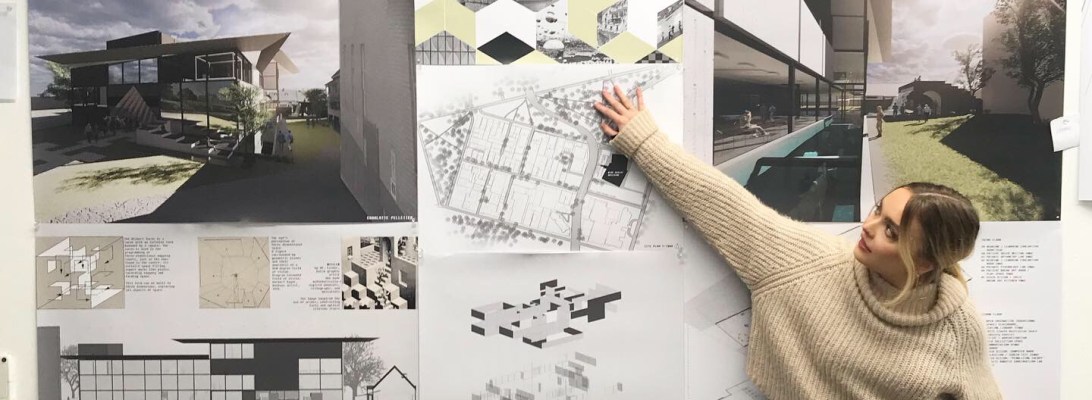
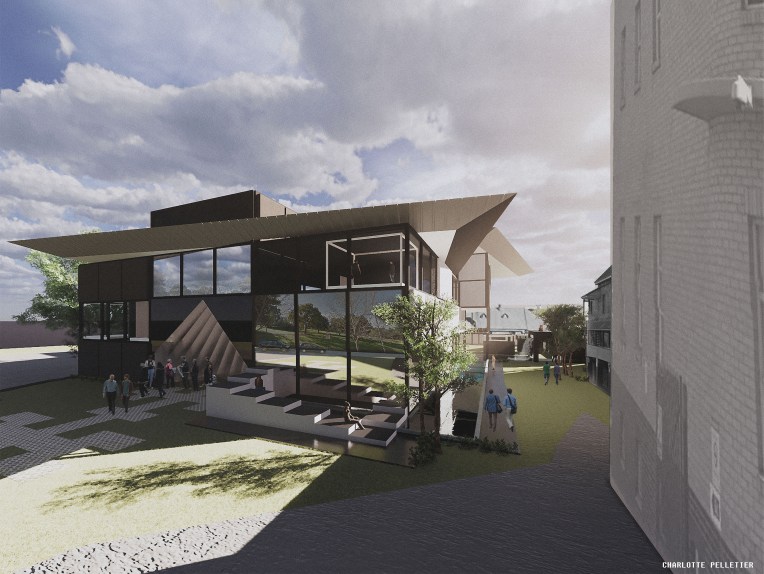
Bini Oculus, is a cross dimensional research centre investigating the human’s binocular vision in order to improve health and wellbeing, and leading further development in “seeing” what is beyond our planet.
With collaborative thinking about dimensionality, bio medical engineers, gaming designers, optometrists, photographers or psychologists work together in understanding how we view the world in dimensions and how this investigated vision can aid certain visual impediments and further space research.
Currently the centre offers space for an overseas company Vivid Vision, working to improve visual impediments by designing and treating patients with an at home, or in clinic interactive binocular vision virtual reality headset.
It also houses local space agency members from the SASIC South Australian Space Industry Centre. Designing and programming roaming robots used on our planet and out of space, 3D scanning its surrounding, gathering data and creating three-dimensional maps.
Japanese guest artist Yayoi Kusama, residing with two members from Vivid Vision, in the original Allen Campbell building internally turned minimal and calculated as part of the Bini Oculus Building. Kusama work is inspired by her lack of feeling in control throughout her life made, either consciously or subconsciously, where her infinite mirror rooms control how others perceive time and space when entering her exhibits.
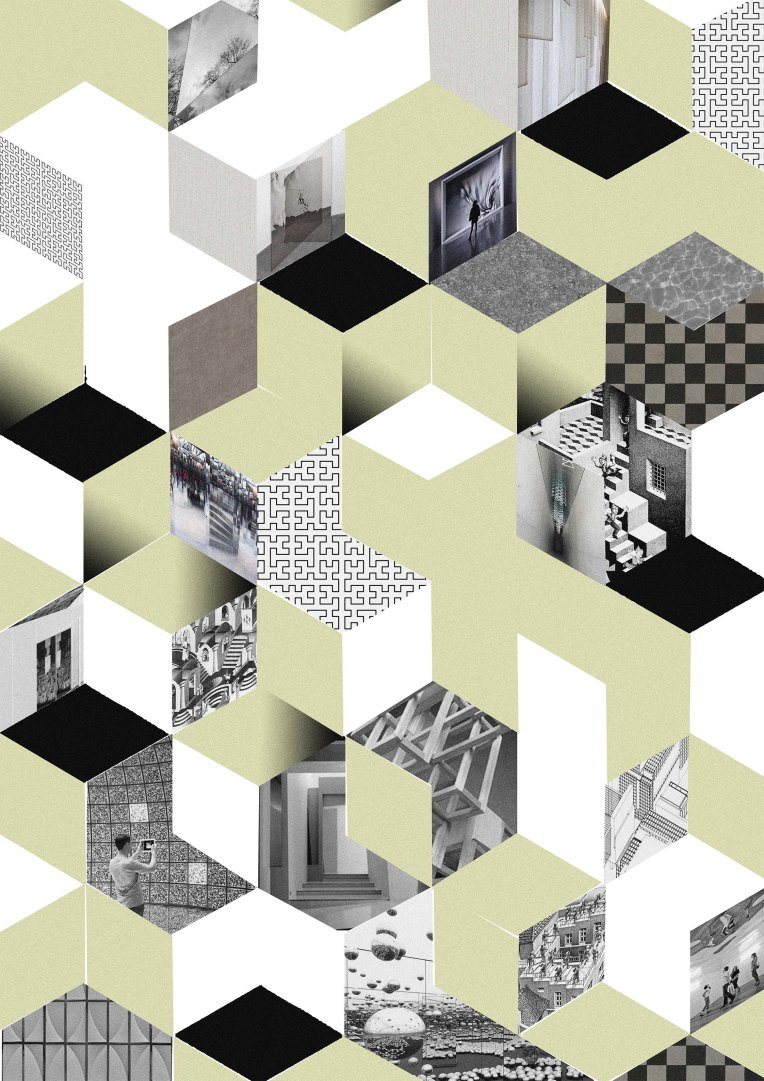
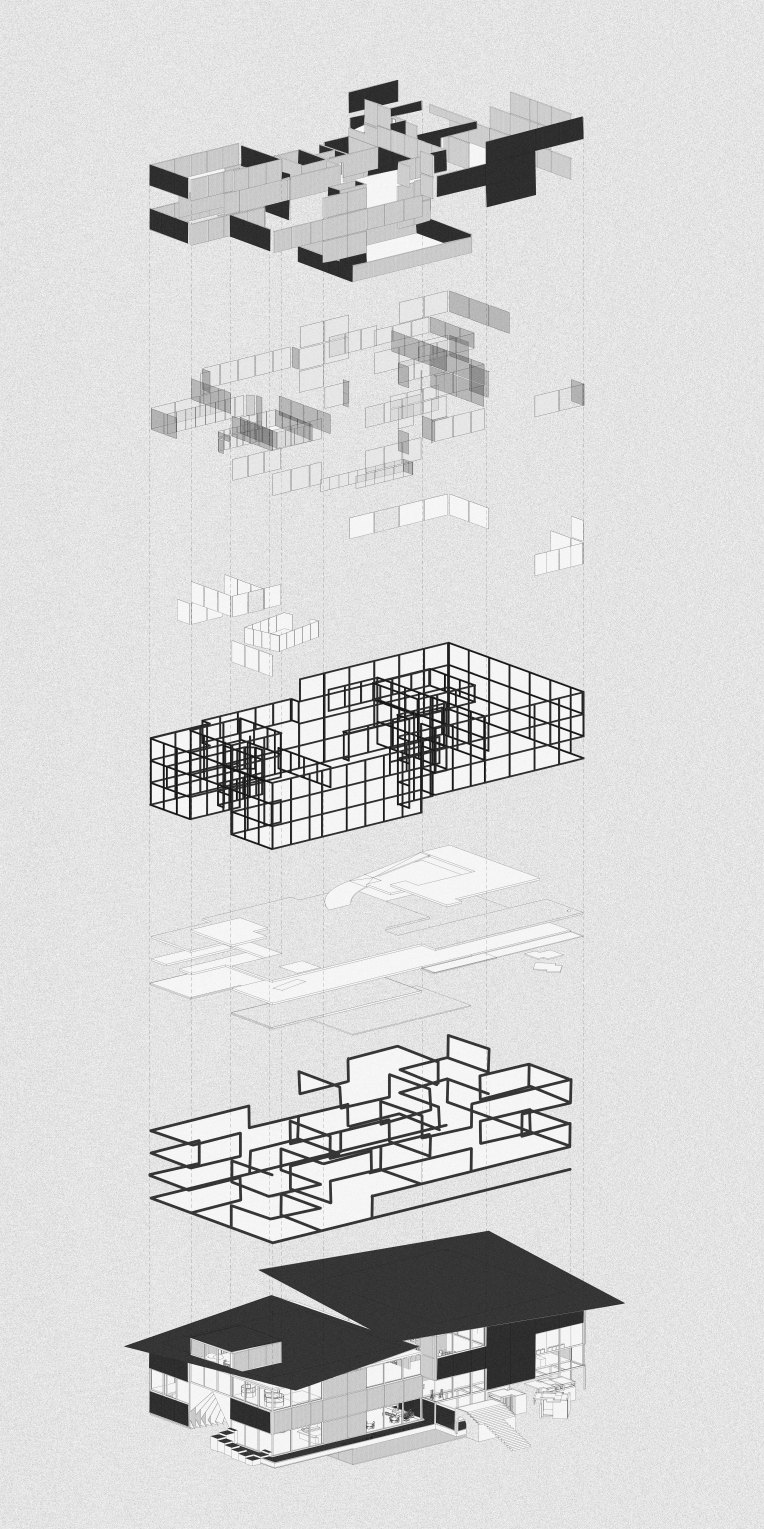
The buildings core follows the form of a space filling curve called the Hilbert Curve. This curve is an infinite form bounded by a square. The curve is used in the programming of three-dimensional mapping robots, just as the ones found in the centre. Its infinite space filling aspect works like pixels, recording imagery and forming space.
The panelling on the exterior is inspired by artist MC Escher’s optical cubes, made up of black, white and grey faces. Playing with mirror, effects of infinity is scattered throughout the building.


Site Analysis


Sketch Design


Design Process and Research
Moodboard


 Charlotte Pelletier